
Save real dollars & time with AI - Watch the Launch Recap
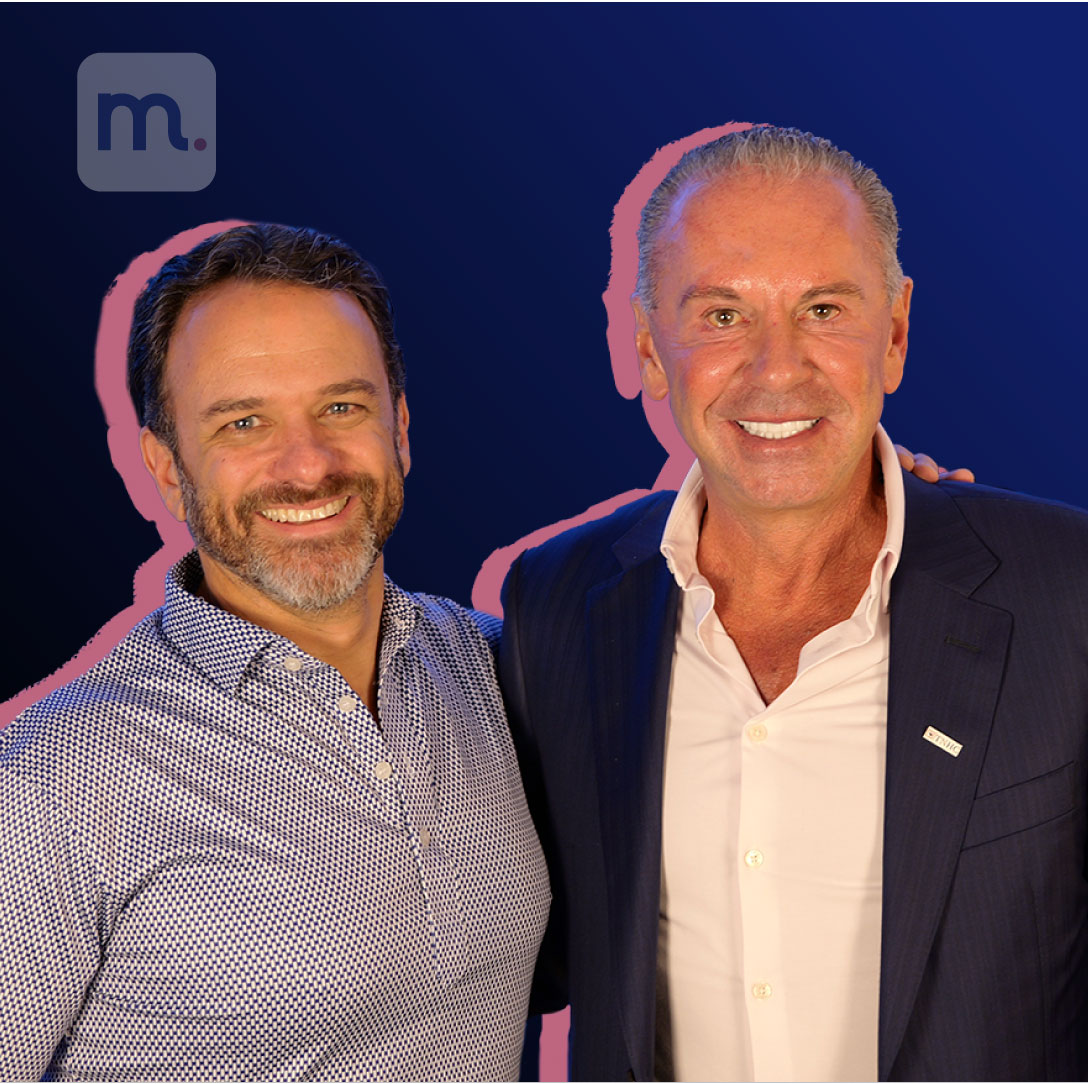




If you work in healthcare in Texas, you know Gary Blake. As co-founder and CEO of Creative Solutions in Healthcare, he has grown a single building in Granbury into a Fort Worth-based company caring for roughly 12,000 patients across about 180 communities.
In this episode of Care, Code, and Capital, Dan Brody sits down with Gary in Texas to talk about what skilled nursing leadership looks like at that scale: a culture built from the front line up, AI pointed at the work nobody wants to do, and a refusal to let the small details slide.
Gary didn't know what he wanted to do in college, so he took an aptitude test. It said he would do well in two fields: funeral homes and skilled nursing. He chose the second and took an administrator-in-training job in Weatherford, Texas in 1993.
While waiting for his interview, he met a resident named Ernestine Markham, from a ranching family in Parker County. Her words stuck with him for over 30 years.
"She just said, well, we need a lot of young people in this business. And I never forgot that. She is the first person that made me feel welcome."
Gary still repeats her message today. But he is clear that attracting young people takes more than saying so. It takes a culture built around what actually motivates each person.
"We take a lot of pride in our industry of individualizing care, but we do a really, I think, a lousy job of individualizing what motivates that person."
For some it is extra PTO or a stronger benefits package. For others it is flexible scheduling, more feedback, or simply having the mission put in front of them.
Gary believes leaders have to model the culture they want, not just announce it.
"You can't just pour the glass and hand it to them. They need to see you drink your own Kool-Aid."
One way Creative does that is Voices of Care, a program led by his daughter Emily Blake. Department heads from all 17 areas of the company are nominated, and the best administrator, nurse, respiratory therapist, dietary manager, and others serve a one-year term. They dissect the company: which policies are redundant, what benefits should look like for someone earning under $40,000 a year, and whether zero out-of-pocket life insurance is possible.
The program came out of a blunt piece of feedback from Emily herself. When Gary complained about having to repeat himself to staff, she told him the problem was him.
"Dad, listen, if you're repeating yourself that many times, your message isn't clear."
For Gary, the lesson was about letting his guard down as an owner. Some of the policies the committee flagged dated back 15 years and had long since been solved by technology.
After training at Beverly Enterprises, then the largest operator in Texas, Gary became what he calls "a systems guy." He worked under Diane Ward at Pyramid Healthcare before starting his own company with one building in Granbury: 181 beds and just 77 residents.
"If you don't believe in yourself, why should anybody else?"
With nearly every system failing, he started where he was strongest. Food came first.
"If this is this person's last meal, does that stand up by itself? So then I said, you know what? We're going to make every meal phenomenal."
Then came customer service. The biggest complaint wasn't call lights or bathing schedules. Residents thought their TVs were broken. Nobody had replaced the batteries in the remote controls. To Gary, that kind of small neglect is a warning sign, and he expects his administrators to get just as granular.
"I don't want administrators that aren't sampling food, smelling the laundry, checking the linen quality, checking housekeeping, knowing how many coats of wax are on their floors."
{{product-demo-call="/components"}}
When Dan asks about technology in skilled nursing, Gary starts with how his team picked its targets. It wasn't his own assessment. Creative's AI team asked every director, vice president, and supervisor the same question: what are your two heaviest lifts?
In accounts payable, the answer was uploading and coding a flood of invoices. Creative's AI model now identifies the vendor, reads the invoice, assigns GL codes line by line, and posts to the general ledger.
"You think, oh, that's not happening. It's been happening over a year in our company."\
Gary is clear that most CEOs expect AI to find revenue, and Creative works on that too. But he argues the bigger payoff is making jobs less mundane, which means fewer errors, lower turnover, and more time for the moments that matter with residents and staff.
"When your turnover is up, your quality is down, no matter what industry you're in."
His advice for smaller operators with 1 to 25 buildings who think AI is too big a lift: you don't need a whole department. Hire someone part-time, get up to speed, and find a product that solves a real problem.
Looking 10 years out, Gary wants technology to raise the quality of nursing documentation and communication so nurses already know how a resident is doing before they walk in the room. And if someone handed him $5 million, he would invest it in pushing that same intelligence down to entry-level staff, giving housekeeping and laundry teams real feedback on their performance. "That is where the bread and butter is made," he says, and it is also where turnover is highest.
Gary opens every interview the same way: "This is not an interview. This is a conversation." Then he asks something no candidate has rehearsed, like what he would find if he opened their refrigerator, or which grandparent was their favorite and why.
"You can get past your parents. You can't get past that grandparent."
He still gets emotional remembering one candidate, Carlton, who talked about a grandfather who always stood up for him. Gary knew right then he was hiring the right person. Carlton has since gone on to start his own company in East Texas.
Dan asks about data silos between hospitals, physicians, and skilled nursing facilities. Gary calls it one of the best questions he has heard in a long time.
"We are the custodian of the patient and their records. They are not our patients. We are the custodian."
Creative gives its physicians view access to clinical records and pairs data sharing with AI in admissions. The system verifies benefits and runs checks so the company can give a hospital an answer in about three minutes. Just as important, it helps catch details buried in long clinical files, like a note about suicidal ideation, so the company only accepts patients its buildings are equipped to serve.
"Nursing homes have always needed hospitals. Hospitals haven't always needed nursing homes. That paradigm has shifted."
Gary says that approach has lowered return-to-acute rates and improved relationships with hospital systems and managed care. Taking any patient out of greed, then sending them back in worse shape, is not the legacy he wants.
Gary points to remarkable access to state leadership. Any operator in Texas, whether they run five buildings or 180, can get time with policy advisors at the governor's office, lieutenant governor's office, and legislature. He also credits regional program managers who listen, and a state food supply that lets Creative serve residents Texas-raised beef, chicken, and pork.
That commitment to local relationships extends to vendors. Creative prefers privately held partners it can call directly, and it invests in pharmacies because medication is, after food and care, the next most important thing that touches residents.
The best advice Gary ever received came from his first real boss, Pat: work harder than you think you are physically able to. In the Blake family, nobody says "don't work too hard."
For anyone figuring out what to do next, in healthcare or not, his advice is to find a quiet place and listen.
"If your head, your heart, and your gut are giving you the green light, go for it."
Gary Blake and Dan Brody cover:


