
Save real dollars & time with AI - Register for the launch here
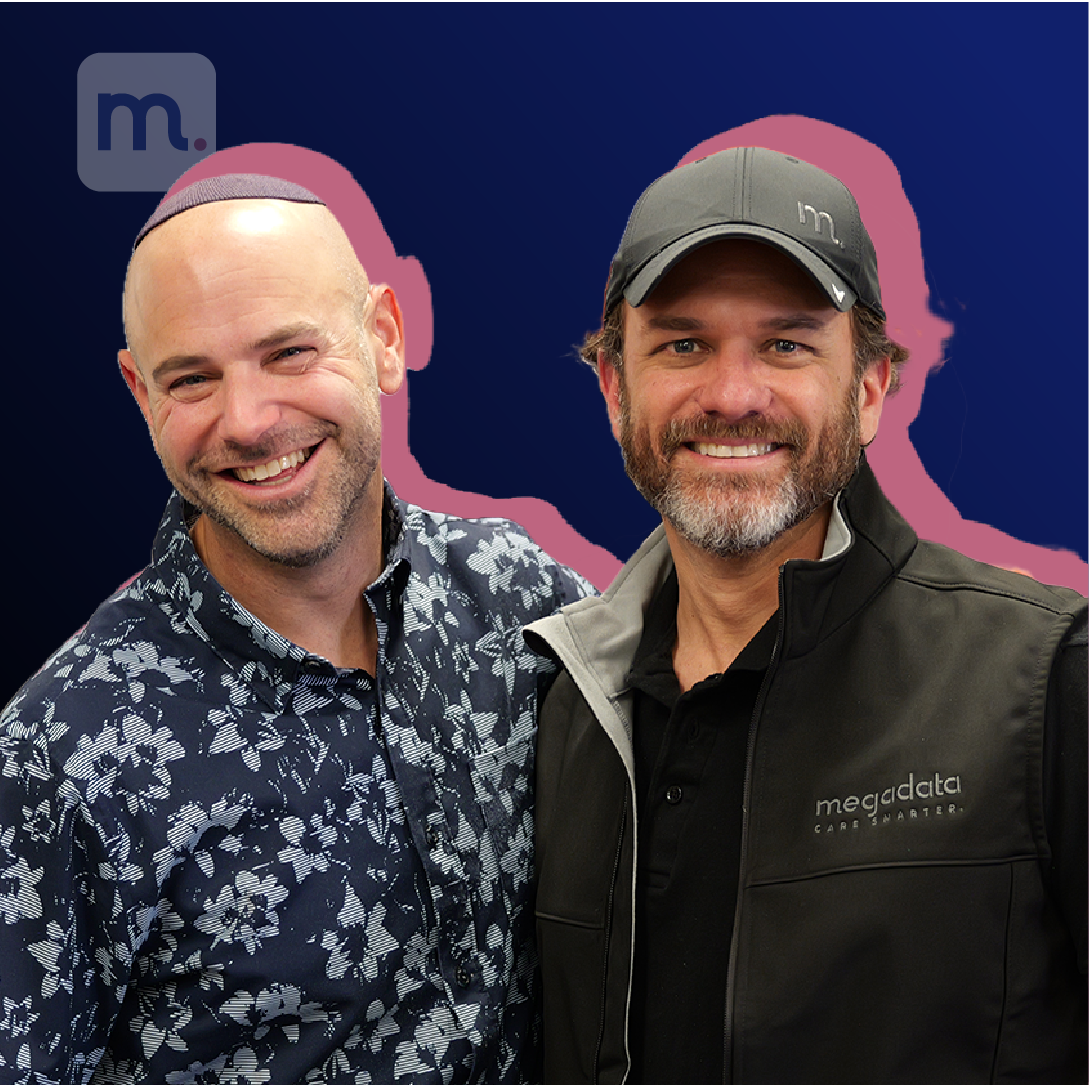




For Marc Halpert, it started in New Jersey at a kosher pizza restaurant where he waited tables and figured out he needed more. It continued at a Jewish summer camp where he spent two summers caring for special needs children and elderly men — and discovered, without knowing it at the time, that this was the work that made him feel most alive.
Today, Marc is the CEO and co-founder of Monarch Healthcare Management — 63 skilled nursing and assisted living facilities across Minnesota, over 5,000 staff, and 5,300 residents who call Monarch home. Along the way, he pioneered robotic automation in long-term care, built one of the most recognizable cultures in the industry, and earned a nickname that says everything about the organization he built: the Disney World of healthcare.
In Episode 5 of Care Code Capital, Dan Brody sits down with Marc for a wide-open conversation about leadership, innovation, culture, and what it looks like to run toward something instead of away from it. They cover the robot that didn't quite work, the director of nursing who ran across a room to give him a hug, and the holiday party that made a CEO cry on stage in front of his entire company.
This is not a polished origin story. It's the honest one.
He'll tell you the pivot point was a girl from Chicago.
Marc was selling wireless internet out of the Empire State Building — before Wi-Fi was a concept most people understood — when the relationship brought him to the Midwest. Her father worked in healthcare. Marc, who had spent summers caring for people and loving it, took an interview on a whim and landed as the admissions coordinator for a 485-bed psychiatric facility on the South Side of Chicago.
On his third day, his manager went to a Jimmy Buffett concert. The SWAT team showed up. A resident had called i an issue at the facility. Marc was the only one there.
"I just figured it out."
That moment — left alone in a crisis, no playbook, no backup — became the template for how Marc operates. Not the chaos itself, but the response to it. He stayed. He handled it. And he went back the next day.
What followed was a decade of intentional groundwork inside a multi-facility company. He stripped and waxed floors. He worked as a dietary aide, passing trays when his cooking didn't pass muster. He went through administrator training and ran his first nursing home — an 84-bed mom-and-pop facility on the North Side — and started to understand what great care could look like when someone actually cared enough to build it.
"In 2005, if you wanted to make money in healthcare, you were told to become an administrator. That's where the money was. But I never really thought about the money. I just wanted to do better than what I was seeing."
Eleven years ago, Marc got a call from a friend about an opportunity in Minnesota. He said no twice. The third time, he said yes — because someone told him you can't say no a third time, and he believed it.
He flew to New Prague, Minnesota, walked into the first facility, and fell in love.
"My entire company knows the love story of how I came to Monarch. Every single person."
What he inherited was four nursing homes, three assisted living facilities, a small corporate office, and 18 employees. The facilities were well-cared for. The culture was warm. The census was fine. The problem was simpler and more stubborn than any of that: complacency. A status quo that nobody had ever thought to challenge.
Marc thought to challenge it on day one.
The name came from Josh's wife, who discovered that the Monarch butterfly is the state insect of Minnesota. The logo came from a design firm that kept coming back with one consistent element across every single rendition: orange. A Tough Mudder race that summer produced t-shirts that said "Bleed Orange." And one by one, a staff member would show up in an orange shirt, an orange watch, orange kicks — and something started to feel like something.
"It transfers this concept of branding because you're not just you — you're part of a family."
Innovation made it into Monarch's mission statement a few years ago. Not as a buzzword, but as a commitment — because Marc had already seen enough of the future to know where long-term care was going.
Monarch was the first nursing home in the United States of America to deploy automated robots. The program was built in partnership with the University of Minnesota Duluth. The robots came in, served residents, interacted with staff, and delivered on some of what they were supposed to do — and not all of it.
Marc will tell you it didn't fully work. He'll also tell you it was one of the best decisions he ever made.
"When I saw the demo for the first time, I said — wow. This is the future. It's going to go somewhere."
It has. Today you see automated machines mopping floors in airports and navigating streets. The question in long-term care is never whether technology is coming — it's whether you're building toward it or waiting to be surprised by it. Marc was building toward it before the industry had a framework for it.
His take on AI is similarly grounded. He's been using Claude in his day-to-day work, and he'll tell you with a laugh that he still doesn't fully understand how it works. What he knows is that it opened up a new world. His staff knows more about it than he does. He surrounds himself with people specifically because of that.
"I don't know. I'm excited. The future is going to bring us something."
What he's clear about, even with all of that optimism, is where the line is.
"Is a machine going to take care of a resident? No. No human needs to take care of human. That's not going anywhere."
Marc tells a story about walking into a distressed facility that Monarch was taking over. The announcement had been made. The staff was waiting. He walked in, introduced himself, and got ready to start the work.
The director of nursing came across the room and hugged him.
"She said — thank you so much. I know this place could be awesome. We just needed someone to love us. Someone to believe."
That moment lives in the same category as the holiday party music video — where Marc watched his team get emotional watching themselves in the company they'd helped build — and the stakeholders meeting where he stood on stage, looked out at what Monarch had become, and couldn't hold it together.
"I got emotional on stage looking around like — what happened? And it's beautiful. It would not have happened without all those people."
These aren't moments of weakness. They're the receipts for a decade of showing up.
Marc doesn't pretend to have all the answers on where the industry is going. What he has is a clear-eyed sense of what he's watching.
On aging: The demand is structural. Baby boomers are getting older. Nobody has fixed that yet. The need for skilled nursing isn't a trend — it's a guarantee. Monarch has built specialty units and programs around the specific needs of the communities they serve, including a growing focus on memory care as dementia and Alzheimer's present in younger and younger patients.
On care models: He believes in aging in place where it's possible. Even as a nursing home owner, his honest answer is that if someone can stay home and get good care at home, that's the best outcome. When the needs exceed what home care can provide — that's where Monarch has built something worth coming to.
On technology: Excited but grounded. Robots for floors and medication management. AI for decision-making support. But always with the understanding that the human beings in these buildings are the irreplaceable part. Technology's job is to free them up to do it better — not to replace them doing it at all.
Dan asks Marc what he'd say to someone who wants to build something in healthcare. The answer is exactly what you'd expect from someone who stripped floors and passed meal trays before he ran anything.
"Are you ready to run? You're either going to run forward or you're going to run backwards — but you're going to be moving."
He means this practically. Healthcare is a regulated, demanding, relationship-driven industry that will find every gap in your commitment and apply pressure to it. The operators who build something real are the ones who came in because they wanted to — not because it seemed financially logical.
"It's not a difficult business. It requires you to care. It requires you to want to make a difference."
His closing advice to anyone figuring out where to put their energy — in healthcare or anywhere else — is the simplest thing he says in the entire episode.
"Do something that makes you happy. Do something that makes you smile so you can help others smile."
Coming from someone whose dress code literally requires a smile, it doesn't sound like a platitude. It sounds like a blueprint.
Marc Halpert is the CEO and co-founder of Monarch Healthcare Management, one of Minnesota's largest and most innovative skilled nursing and assisted living operators. Founded 11 years ago from a single campus in New Prague, Minnesota, Monarch has grown to 63 facilities across the state with over 5,000 staff and 5,300 residents.
Monarch's brand is built around the Monarch butterfly — the state insect of Minnesota — and the color orange, which became a cultural rallying point through a Tough Mudder race t-shirt that said "Bleed Orange." The company's first line of its dress code: a smile must be worn at all times.
Monarch was the first nursing home in the United States to deploy automated robots in a resident care setting, a milestone that came out of a partnership with the University of Minnesota Duluth and reflected the company's commitment to innovation in long-term care.
Someone once called Monarch the Disney World of healthcare. Marc's response: there's no better honor.
Care Code Capital is a podcast exploring the business, strategy, and leadership behind long-term care. Hosted by Dan Brody, each episode features candid conversations with the operators, investors, lawyers, and innovators shaping the future of healthcare.
Listen to the full episode wherever you get your podcasts.


