Save real dollars & time with AI - Watch the Launch Recap
AI in long-term care is most useful on the questions that are hardest to answer: the ones that ask why, cross departments, and lead to a sharper follow-up. Asking AI for last month's census is easy. Asking it which shift is driving a building's overtime, and why, is where the value is.
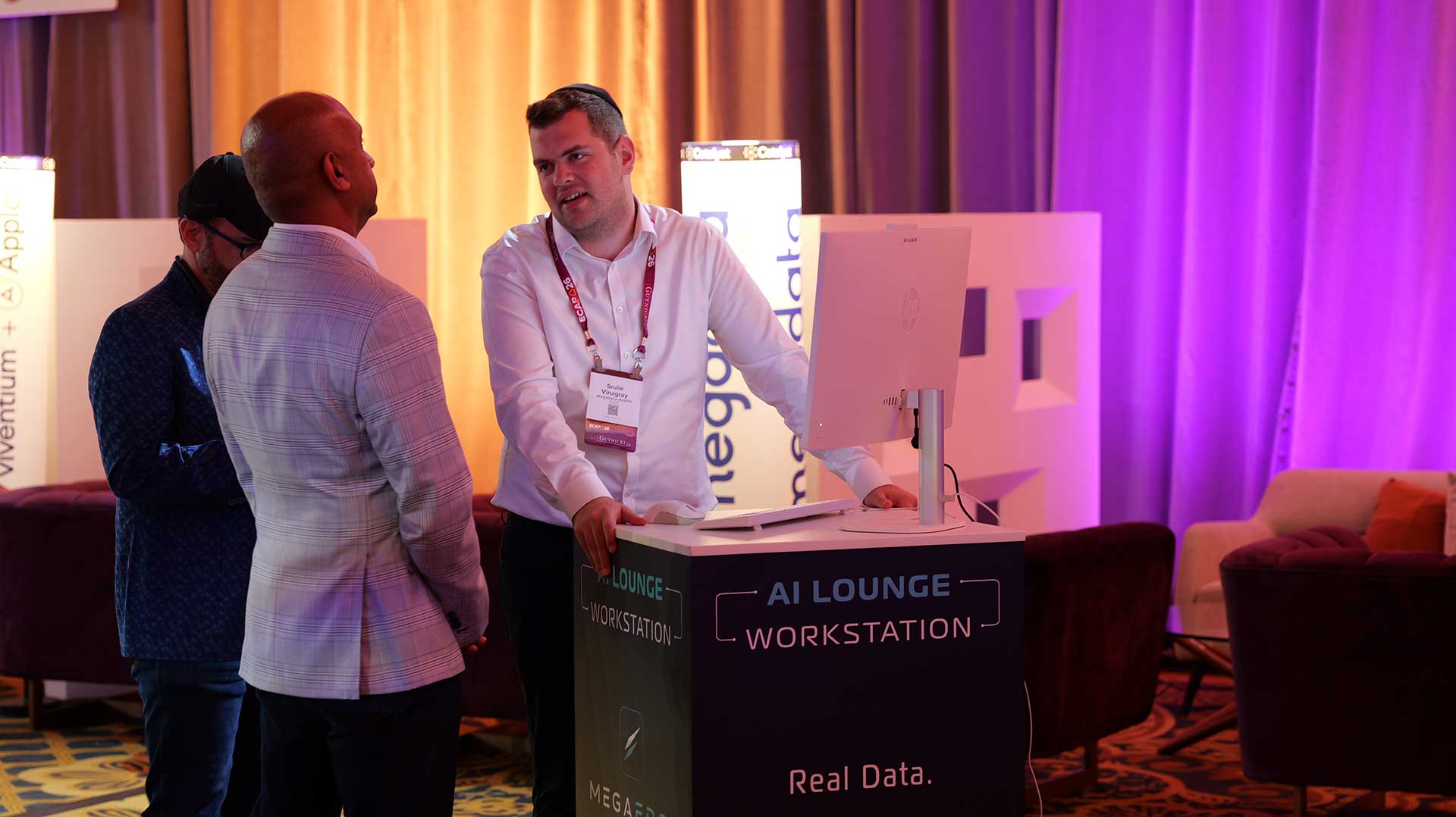
We saw that play out for two days at eCap West 2026 in San Antonio.
In the MegaEdge AI Lounge, skilled nursing operators booked 15-minute sessions and sat down one-on-one with our AI engineers. Together, they asked Claude questions about a portfolio of buildings through the MegaEdge connector.
MegaEdge is Megadata's AI layer for skilled nursing. It connects AI models like Claude to the governed operational data in Megadata, so operators can ask questions about their business in plain language. Every session ran on a fully synthetic demo dataset, so no customer or resident data was ever on screen.
Some questions were quick lookups. The best ones weren't. They started with a real problem and kept going, one knowledgeable follow-up at a time, until the operator understood the cause.
This article is about those deep questions: what operators asked, how their follow-ups cracked specific problems, and how you can ask AI better questions about your own buildings.
A surface question asks for a number. A deep question asks what's behind it.
| Surface question | Deep question |
|---|---|
| What was overtime last month? | Which CNA had the most overtime, and whose call-off caused it? |
| What is our census? | Are our census shortfalls about referral volume or conversion? |
| How many falls did we have? | When incidents go up, is there a pattern in which staff are on shift? |
| What is our rehospitalization rate? | What's driving our rehospitalizations: diagnosis, length of stay, admission source, or payer? |
Surface questions are a fine place to start. Every deep conversation in the Lounge began with one. The difference is what happened next.
Deep questions tend to share four traits:
These five conversations show what AI in nursing homes can do when an operator who knows the business keeps asking.
This was the deepest conversation in the Lounge. An owner-operator started with a familiar problem, overtime, and went seven questions deep:
Look at the arc. The operator went from a portfolio number, to one person, to one day, and then turned the finding into a policy question: does staffing to a higher HPPD actually reduce overtime here?
The last step is the most telling. The operator checked how the metric was defined by switching from CMS-reported labor to the building's own data. That's exactly what you want people doing with AI. It only works when definitions are consistent underneath.
Another conversation started with a simple clinical question and ended in the financials:
Six questions. Clinical, staffing, and financial data in one conversation. A dashboard can show each of those numbers. It can't follow an operator's train of thought from one to the next.
The turning point was question four. Connecting falls to who was on shift moved the problem from "a clinical issue" to "a staffing pattern you can do something about."
"Are our census shortfalls about referral volume or conversion?" This is the census question every operator wrestles with. Are we not getting enough referrals, or not admitting the ones we get?
Claude ranked every building by referrals received and referral-to-admission conversion rate, month by month for three months. That split the portfolio into buildings with a volume problem and buildings with a conversion problem.
Then the follow-up: "Are certain hospitals the problem?" One more question, and the answer moved from the building level to specific referral sources.
Those are two very different fixes. A volume problem points to business development. A conversion problem points to intake, clinical acceptance, or bed availability. (For more, see our guide to tracking admissions and discharge trends.)
"Which part of the business is the biggest driver of our financial results: labor, census, payer mix, rehospitalizations, or clinical quality?"
This question compares five areas against each other, ranked by dollar impact for each building over three months. Most finance teams can't answer it quickly. Each area lives in a different system, with a different owner and reporting calendar.
Once the first answer was on screen, the operator asked for the same view built around clinical risk. That's the pattern: a strong first answer makes the next question easy to ask.
"Which buildings have the highest 30-day rehospitalization rates, and what's driving them?" The operator asked for drivers by diagnosis, length of stay, admission source, and payer, alongside falls per 1,000 resident days, new facility-acquired wounds, and Five-Star quality ratings.
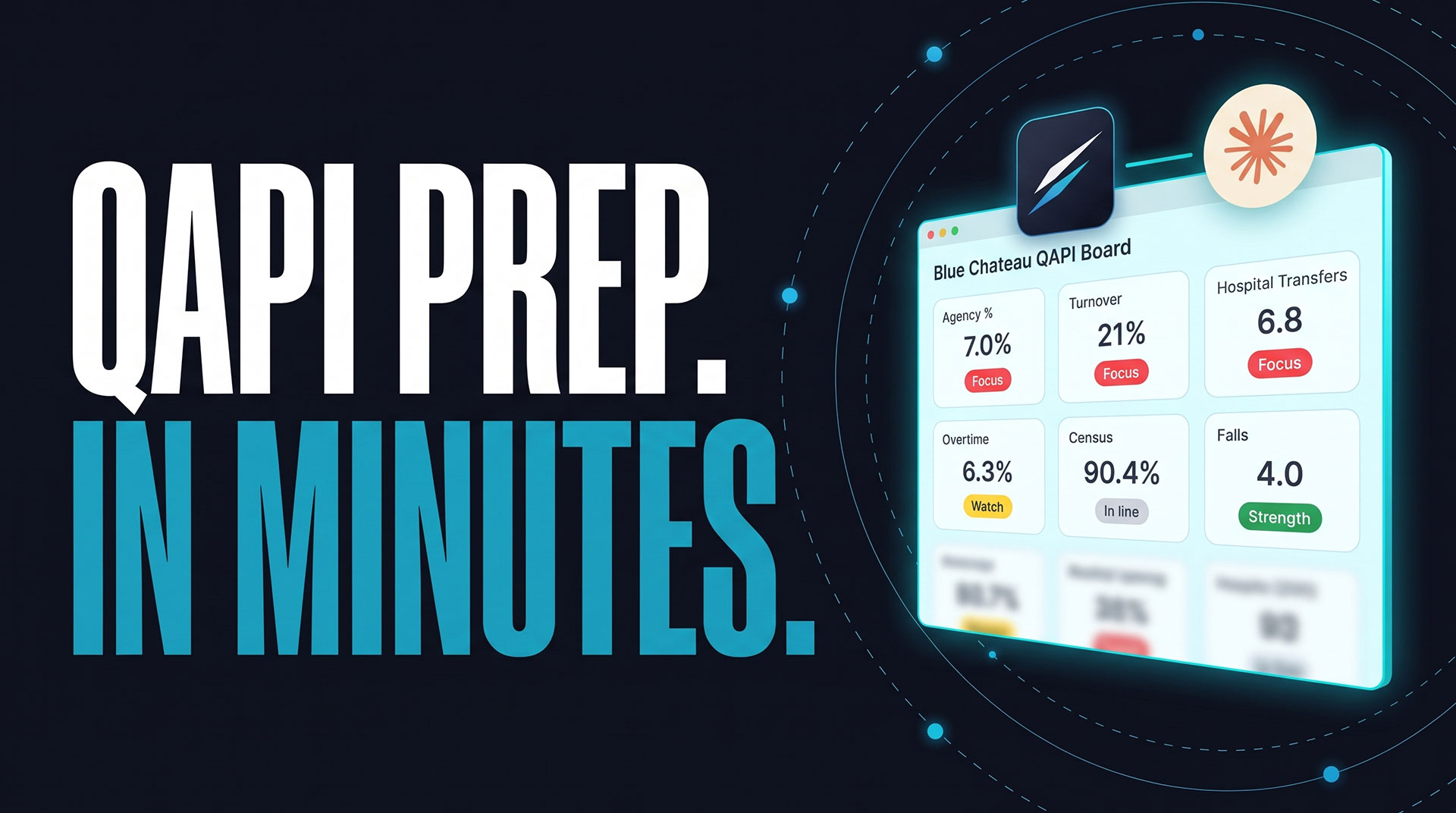
The rate is easy to find. The drivers are what make a QAPI meeting productive instead of descriptive. (See how one administrator built a QAPI meeting board with Claude and MegaEdge.) (Our article on rehospitalization analysis in long-term care covers why drivers matter more than the rate.)
Have a problem you'd want to chase this deep? Book a 20-minute walkthrough and bring the first question. We'll work through the follow-ups with you.
The follow-ups were where the gold was. Looking across the Lounge conversations, the best ones did one of four things:
| Follow-up move | Example from the Lounge |
|---|---|
| Narrow down | From building overtime to one CNA, then one call-off |
| Cross departments | From falls to who was on shift |
| Check the definition | From CMS-reported labor to the building's own labor data |
| Turn a finding into a decision | "Does staffing to a higher HPPD actually reduce overtime?" |
None of these need technical skill. They need someone who knows the business and knows what doesn't add up. That's the operator's advantage. AI makes the follow-up fast. The operator makes it smart.
Each deep question pulls from several systems at once.
| Deep question | Data it needs |
|---|---|
| Overtime down to a call-off | Payroll, time clock, schedules, census |
| Falls vs. staff on shift | Incidents, time clock, schedules |
| Referral volume vs. conversion | Referrals, admissions, census |
| Biggest financial driver | Payroll, census, payer mix, clinical, financials |
| Rehospitalization drivers | Clinical, admissions, payer, quality measures |
That data usually sits in your EMR, your payroll platform, your billing system, and a few spreadsheets someone maintains by hand. Answering one deep question the usual way means requesting exports, waiting, lining up building names and definitions that don't match, and building the analysis.
That's days of work for one answer. The follow-up, the question that tells you what to do, usually never gets asked. By the time the first answer arrives, the next pay period has closed.
In the Lounge, operators had answers in minutes and asked the next question right away. AI didn't make their questions smarter. It made the follow-up cheap enough to ask.
Deep questions only work if the answers are consistent. Through the MegaEdge connector, Claude doesn't recalculate metrics from raw data each time. It looks up metrics that are defined once, so overtime means the same thing this week as last month. It also inherits each user's permissions, so it only sees what the person asking is allowed to see.
That consistency is what MegaEdge was built to provide. Behind every question, the MegaEdge Engine picks the right metric, so look-alikes such as payroll overtime and time clock overtime don't get mixed up. Megadata has spent years connecting and cleaning skilled nursing data. MegaEdge puts that work behind every answer.
That's why the owner-operator could switch from CMS-reported labor to the building's own data and trust the comparison.
You don't need a data team. You need a real problem and the habit of asking what's behind each answer.
For more on separating useful AI from the hype, see our realistic look at AI in long-term care.
Yes, through better questions, not on its own. AI shortens the time between seeing a number and understanding the cause, and the savings come from the decisions that follow.
The overtime conversation shows how. Overtime at one building is a number. Overtime caused by repeated call-offs on one shift is a scheduling problem you can fix. Overtime that doesn't drop when HPPD rises tells you something about how shifts are covered. Each points to a different decision.
A few honest limits:
If labor is your starting point, see our guide to reducing SNF staffing costs with data analytics and how operators track overtime and agency in the labor management dashboard.
Operators use AI to ask questions about their operations in plain language and get answers from their own data. The most valuable use is deep questions, such as which shift is driving a building's overtime, followed by follow-ups that narrow down the cause. That works best when AI is connected to governed data with consistent definitions.
Ask questions that start with a real problem, compare possible causes, and cross departments. Examples from eCap West include "Are our census shortfalls about referral volume or conversion?" and "When incidents go up, is there a pattern in which staff are on shift?" Then keep asking follow-ups until you reach a decision.
AI helps by shortening the time between spotting a cost problem and understanding its cause, such as whether overtime comes from call-offs, scheduling gaps, or staffing levels. The savings come from the decisions operators make once they know the cause, not from the AI itself.
It depends on the setup. Look for AI connections that inherit each user's permissions, use defined metrics instead of recalculating from raw data, and run on HIPAA-compliant infrastructure. At eCap West, every session used synthetic demo data, so no real resident or employee information was shown.
MegaEdge is Megadata's AI layer for skilled nursing operators. It connects AI tools to Megadata's governed operational data, so you can ask questions about census, labor, clinical, and financial performance in plain language. The MegaEdge connector works in Claude today, with ChatGPT support coming soon.
Surface questions are easy for any AI tool. The conversations that mattered at eCap West went further: from a building to a shift, from falls to staffing, from census to specific hospitals.
Three takeaways:
Thank you to every operator who booked a session in the MegaEdge AI Lounge and brought a real problem.
If you want to see how deep AI in long-term care can go with MegaEdge on your own questions, book a 20-minute walkthrough with our team. Bring your hardest question. We'll bring the follow-ups.