
Save real dollars & time with AI - Register for the launch here
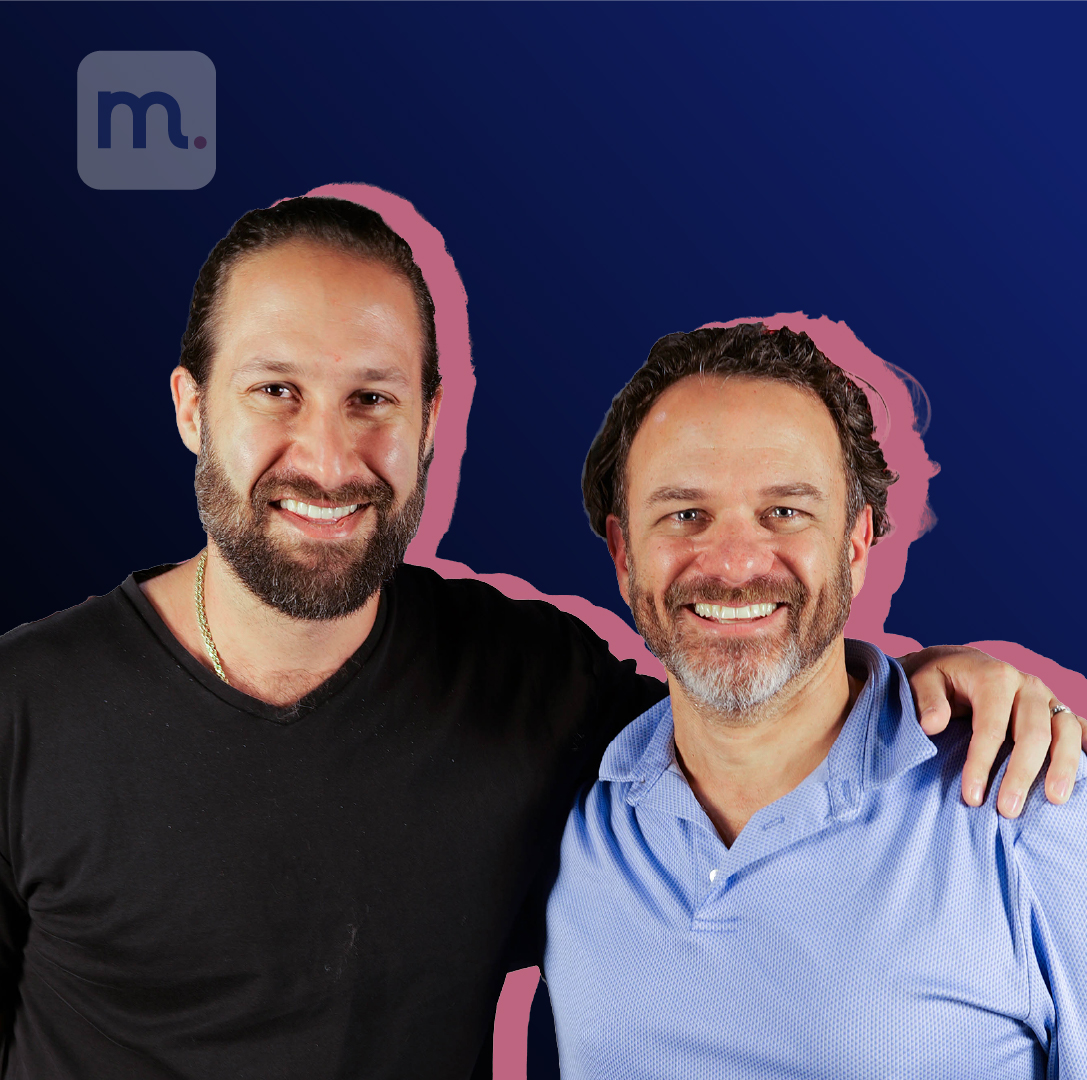




AI in skilled nursing isn't waiting for the industry to catch up. The operators running toward it — with the right infrastructure, the right team, and the right mindset — are already pulling ahead. In Episode 6 of Care, Code, and Capital, Dan Brody sits down with Nick DeStefane, President of American Medical Administrators (AMA), to talk about what it means to grow up inside this industry, rebuild yourself from the ground up, and use AI to do what most operators haven't been willing to try: tear down the silos costing patients their health.
Nick DeStefane's origin story doesn't start with a business plan. It starts with his first steps.
At around one year old, he took them inside North Village Park — a nursing home in central Missouri that his father had bought out of bankruptcy court in 1989. That facility is still operating today. Still 184 beds.
His father came from a humble background. Worked five jobs through college. Never slept. Built a nursing home company from nothing — and Nick watched every bit of it from a front-row seat. Not as a passive observer, but as a participant. Starting at 15, as an assistant maintenance director.
"I think that's one of the greatest gifts I ever learned from him. Many, by the way — it's a long list."
His father never handed him anything. That was the point. What Nick absorbed wasn't just nursing home operations — it was an understanding of what it actually takes to build something worth building.
Before AMA. Before the company. Before the vision. There was a harder story.
Nick DeStefane has been sober for 12 years. And the way he tells it, getting sober wasn't just a personal milestone — it was the moment everything about how he thought had to change.
"My best thinking got me here. So I need to change everything about my thinking."
Recovery meant surrendering the version of himself he'd been holding onto — and starting over with a completely different framework for how to live and lead. What grew in its place was something he still draws from every day: a natural gratitude for every challenge, and a perspective that turns fear into fuel.
"Even your worst day is a thousand times better. It gives you this calm — and what a gift that is."
That foundation is what he credits for being able to build through real adversity. When the deal falls through. When the challenge feels immense. He's already been through something harder. And that changes everything about how you lead.
Nick DeStefane didn't inherit AMA. He left a comfortable salary, a clear path forward, and everything that was earned — for hope.
"I left it for nothing. For the hope of something better."
He partnered with Jonathan Lutz — a pastor's kid with a rare ability to connect with physicians and a way of seeing the world that Nick describes as genuinely different. They were set to join a publicly traded company that, it turned out, had serious issues neither of them knew about. So they walked away. And opened AMA the next day.
Today, American Medical Administrators — operating under the umbrella of Reliant Care Management Company — runs 60-plus nursing homes with approximately 6,000 employees, specializing in some of the most advanced, highest-acuity psychiatric populations in the country. They also operate outpatient clinics across 14 states — and are closing on their first hospital in July.
What separates AMA isn't just scale. It's the philosophy driving it. No corporate fear structure. Full transparency. Open-source thinking. And a win-win-win mandate that starts and ends with the patient.
"If we're winning at the expense of anyone losing, I'm not interested."
Nick DeStefane isn't talking about AI in theory. He's building it.
The first problem he targeted: documentation. In skilled nursing, documentation isn't a paperwork formality — it's the difference between getting reimbursed and facing government clawbacks. After COVID sent 50% of the workforce out the door, documentation gaps became existential.
"Try getting someone who's barely making more than minimum wage to do the right thing 24/7 based on all the variables of life."
AMA is now building auditory AI scribing — a system that listens passively during patient interactions and automatically documents what's clinically material, in the exact regulatory language required for reimbursement. No manual entry. No missed notes. No clawbacks from a misplaced word.
The second initiative: a licensed practical nurse goes bedside every single day for ten minutes per patient. Same nurse, same patients — building a baseline that makes anomalies obvious. A patient usually holds her head to the left. Today she's holding it to the right. In a nursing home, that's all it takes to catch something before it becomes a crisis.
Every observation routes automatically to whoever in the organization needs to know — regional nurse, therapy director, quality team, senior leadership. No bottlenecks. No delays.
Nick DeStefane calls it the single biggest problem in healthcare: fragmentation.
Every stop on the patient journey — primary care, specialists, hospital, skilled nursing — is siloed. Each provider has their own system, their own incentives, and their own definition of success. The result is stark: only 40% of transition-of-care visits actually take place. A patient goes to the ER and their primary care physician may never know about it.
"The problem with healthcare today is that it's not actually patient-focused. It's silo-focused."
AMA's answer is vertical integration — owning the entire continuum of care. Outpatient clinics across 14 states. 60-plus nursing homes. And in July, their first hospital. One system. One set of aligned incentives. Data that finally follows the patient.
They're building the technology layer to match: an internal system that communicates across the full spectrum of care, automated reports that reach every specialist who needs them, and an AI layer that pulls every available data point per resident to flag risk — before anyone in the building sees it coming.
"That's where we're going. I think that's where everyone has to be going."
One Line That Stayed With Us
"AI is the future of everything. Forget healthcare — everything. If we're not all in on figuring that out, you're going to fall way behind."
Worth your time, whether you're running facilities, building healthcare technology, or trying to understand what it actually looks like when one operator decides to change an entire industry from the inside out.


